Are Your Goalkeeper Gloves Holding You Back? Know When It’s Time for a pair of New Goalkeeper Gloves
As a goalkeeper, your gloves are more than just equipment; they’re an extension of your hands, your first line of defence, and crucial for every save, punch, and distribution. But unlike a new pair of boots, the signs that your gloves need replacing aren’t always glaringly obvious. Continuing to play with worn-out gloves can significantly impact your performance, increase your risk of injury, and even damage your confidence.
So, how do you know when it’s time to invest in a fresh pair? Here are 5 key indicators that you need a new pair of goalkeeper gloves.
1. The Grip Test: Are You Unconfident When Trying To Catch
This is perhaps the most critical factor. The grip on your goalkeeper gloves is paramount for secure catches and effective punching. Over time, the latex on the palm, including those on high-quality professional goalkeeper gloves, will degrade.
- Signs of Worn Grip:
- The ball feels like it’s slipping more often, even in dry conditions.
- You’re having to squeeze the ball harder to hold onto it.
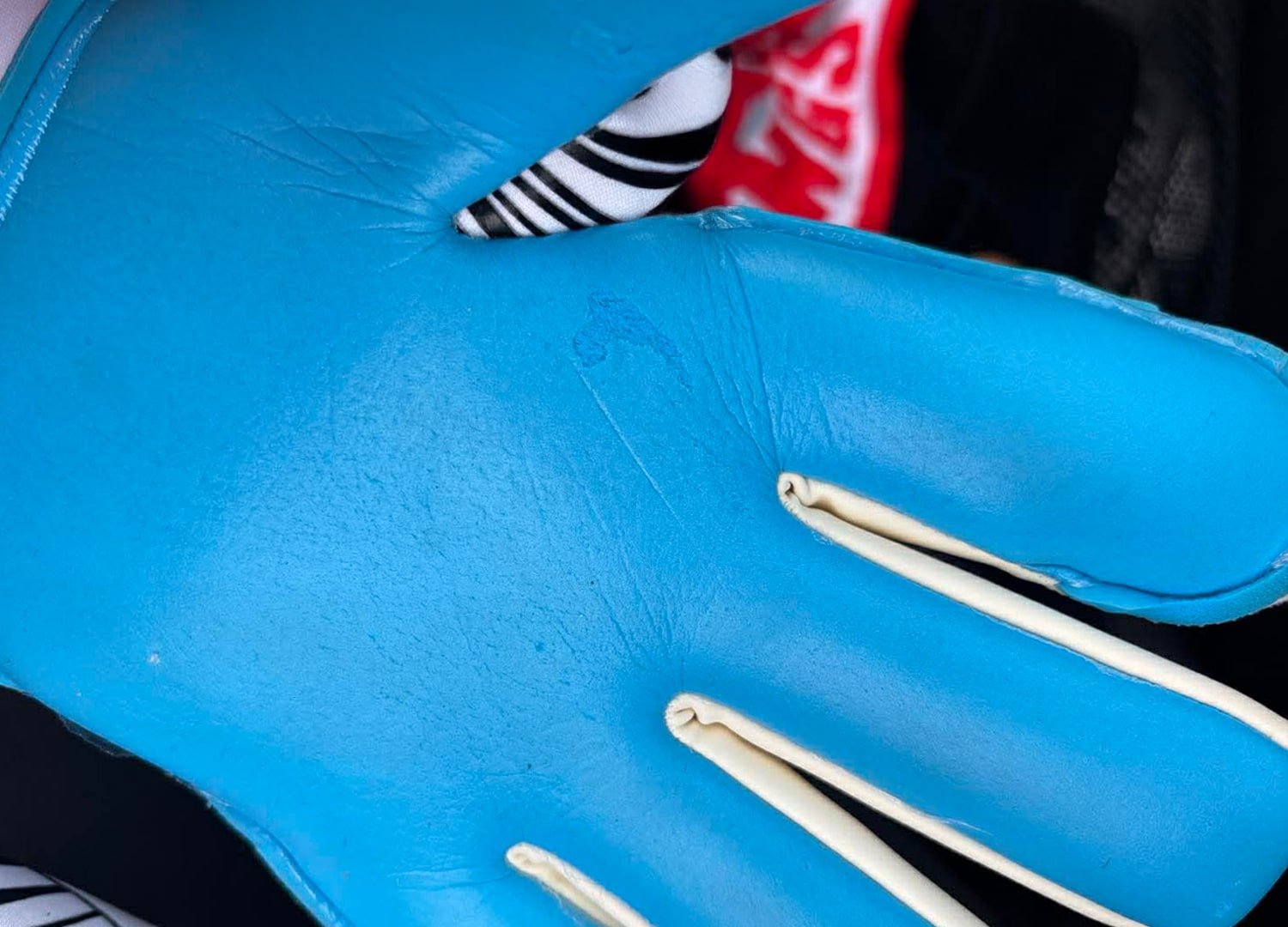
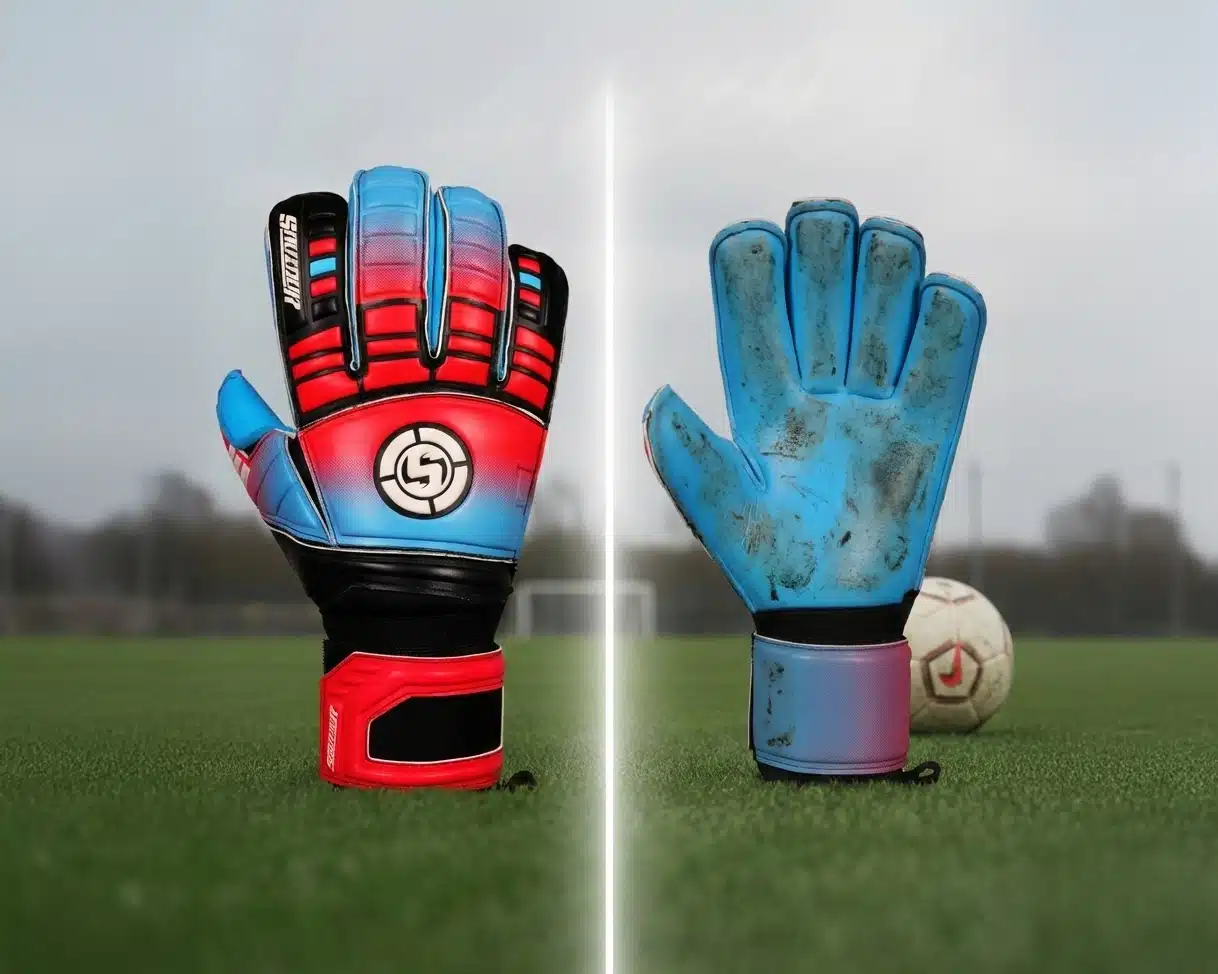
- The latex looks shiny or feels less tacky, even after cleaning.
- Visible bald spots or significant abrasion on the palm.
Pro Tip: Regularly cleaning your gloves can extend their grip life, but once the latex is gone, it’s gone! Check out our Regen Glove Wash here.
2. Visible Wear and Tear: Beyond the Scuffs
While minor scuffs and dirt are normal, significant physical damage indicates it’s time for new goalkeeper gloves.
- Common Wear Patterns:
- Tears or Holes in the Palm: Any breach in the latex compromises grip and protection. This is a clear sign.
- Splitting Seams: If the stitching is coming undone, especially around the fingers or wrist, the structural integrity of the glove is compromised.
- Cracking or Peeling Latex: This often happens on the backhand or fingers and, while sometimes cosmetic, can lead to larger tears.
- Thinning Latex: Hold your gloves up to the light. If the latex on the palm looks noticeably thinner in certain areas, it’s lost its cushioning and grip properties.
Pro Tip: The lifespan of your gloves depends on training frequency, playing surface, and the quality of your goalkeeper gloves.
3. Comfort and Fit: Are They Still Snug and Supportive?
Gloves that no longer fit well can be a major distraction and even a safety hazard.
- Fit Issues to Watch For:
- Loose Fingertips: If your fingers are sliding around too much inside, you lose feel for the ball and protection.
- Stretched Wrist Strap: A worn-out wrist strap won’t provide the necessary support, increasing the risk of wrist injury.
- Loss of Padding: Over time, the internal padding can compress, reducing shock absorption and comfort.
- Unpleasant Odor: While cleaning helps, a persistent, deep-seated smell can sometimes indicate bacteria buildup that’s hard to eradicate, though this is more about hygiene than performance.
4. Performance Impact: Trust Your Gut (and Your Saves!)
Ultimately, the best indicator is how you feel and perform on the pitch.
- Ask Yourself These Questions:
- Are you dropping shots you used to hold easily?
- Do you feel less confident in your handling?
- Are your hands aching more after training or games?
- Do you subconsciously try to avoid using certain parts of your glove because they’re worn?
5. The “Latex Crunch”: Is the Foam Drying Out?
Even if your gloves look clean and hole-free, the latex has a shelf life. Over time, exposure to the sun, heat, and even just the air causes the natural moisture in the latex to evaporate.
- The “Crunch” Test: Press your thumb into the palm. Does it feel soft and springy, or does it feel stiff and “crunchy”?
- The Flake Factor: If you rub the palm and tiny bits of latex start flaking off like dry skin, the chemical bond has broken down.
- The Result: Dried-out latex loses its grip and shock absorption. This means every shot will sting more, and the “stickiness” required to kill the ball’s rotation on impact is gone. If they feel like cardboard, it’s time for a change.
If you answered yes to any of these, it’s a strong sign that your current gloves are past their prime and new goalkeeper gloves are needed. Shop Now.
How Often Should You Buy New Goalkeeper Gloves?
There’s no single answer, as it depends heavily on:
- Usage Frequency: A professional training daily will need gloves far more often than a casual player once or twice a week.
- Playing Surface: Artificial turf is notoriously harsh on glove palms compared to natural grass.
- Glove Quality: Entry-level gloves have less durable latex than professional goalkeeper gloves.
- Glove Care: Proper cleaning and storage significantly extend lifespan.
As a general guideline, amateur keepers playing 1-2 times a week might need new gloves every 2-3 months. Serious keepers or professionals could go through a pair every 2-3 weeks.
Don’t Let Worn Gloves Cost You the Game!
Investing in a new pair of high-quality goalkeeper gloves is an investment in your performance, protection, and confidence. Keep an eye on these signs, listen to your body, and never compromise when it comes to the most important piece of goalkeeping equipment.
Ready for an upgrade? Explore our extensive range of the best goalkeeper gloves, designed for every level and playing style.
FAQ: Buying New Goalkeeper Gloves
1. “How long should goalkeeper gloves last?”
- The Answer: For a serious keeper playing 4-5 times a week, a pair of match-grade gloves typically lasts 2 to 3 weeks. Training gloves with more durable latex can last 2-3 months or more. Professionals may go through a pair every 2–3 weeks because they require 100% grip at all times.
2. “Can I use the same gloves for training and matches?”
- The Answer: You can, but it’s the fastest way to ruin your match performance. High-performance latex is soft and wears quickly. Most experts recommend the “Two-Pair Strategy”: buy new gloves for matches, and demote your old match gloves to your “training pair.”
3. “Does more expensive mean more durable?”
- The Answer: Surprisingly, no. In fact, the most expensive professional gloves often use “Contact” or “Supreme” latex, which is incredibly grippy but very fragile. Cheaper “Hardground” or “Training” gloves use denser latex that lasts longer but is significantly less gripy.
4. “How do I make my goalkeeper gloves more grippy?”
- The Answer: The secret is moisture. Latex is a natural material that performs best when damp. You can Pre-wash them before first use (you do not need to pre-wash our gloves, just make sure their wet/moist to activate late) to remove factory chemicals and lightly splashing the palms with water during a game will “activate” the grip and prevent the foam from tearing.
5. “Should I buy gloves with finger protection (finger spines)?”
The Answer: This is a preference. Finger spines help prevent hyperextension (fingers bending back), which is great for youth players or those returning from injury. However, many advanced keepers prefer gloves without spines for better “ball feel” and flexibility. Check out Finger Protection Gloves here.
For more insights on goalkeeping essentials and to find your perfect pair of gloves, visit our Goalkeeper Glove Shop or for more in depth information check out our Glove Cut page, Size Guide, or Glove Care Section.
Other Relevant Article: Eco Friendly Goalkeeper Gloves: Introducing the ECO-FLY Range by SAVIOUR GK